

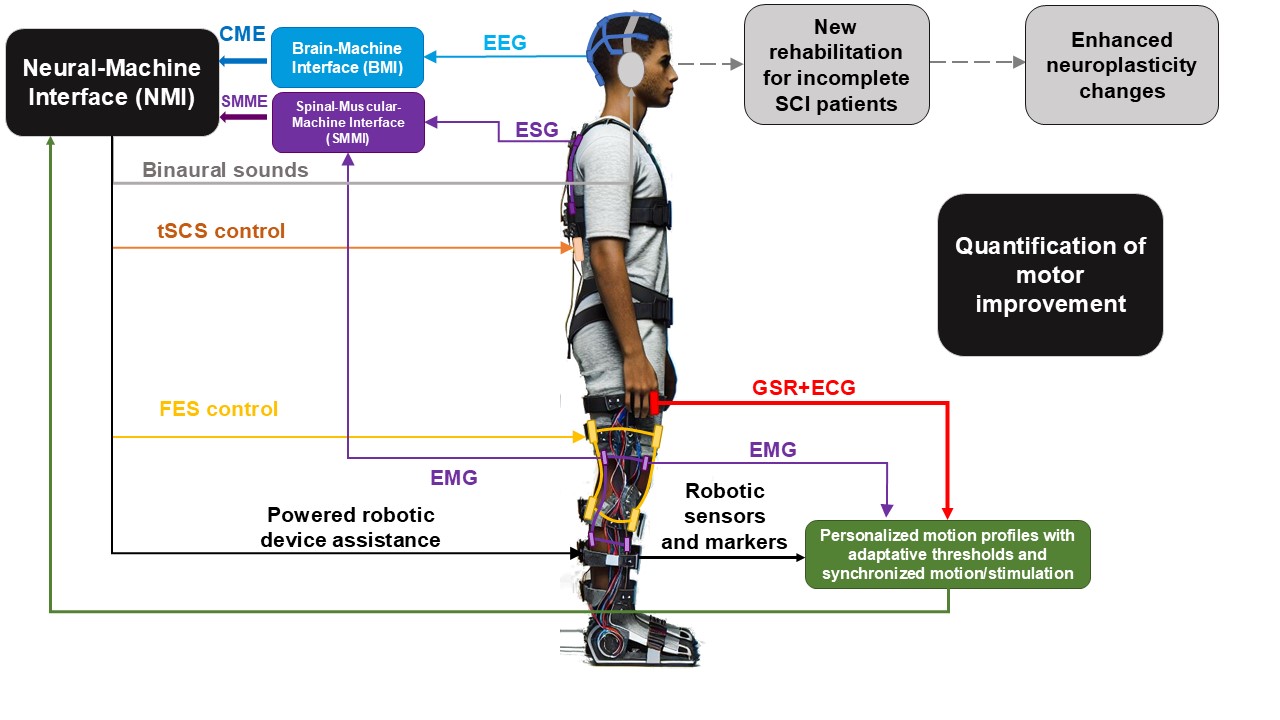
RESTATE: Personalized gait neurorehabilitation approach based on assistance and stimulation proportional to cognitive and motor patient’s state
SUBPROJECT 1: Development of a neural interface for lower-limb rehabilitation based on real-time assessment of cognitive and physical status (PID2024-156759OB-C31)
- Principal Investigators: Mario Ortiz & José M. Azorín
- Center: Miguel Hernández University of Elche, Spain
SUBPROJECT 2: A Multimodal Strategy for Gait Recovery: Exploring the Role of tSCS and FES in SCI Patients (PID2024-156759OB-C33)
- Principal Investigators: Hatice Kumru
- Center: Guttmann Institute, Spain
Journals, Conferences, Data repositories and protocols
Tesis, Dissemination activities, Project Activities & Events
Abstract
The RESTATE project proposes a personalized approach to enhance gait neurorehabilitation in individuals with incomplete spinal cord injury (SCI) by integrating adaptive robotic assistance and neurostimulation based on the patient’s real-time cognitive and motor state. The project aims to improve neuroplasticity and functional recovery through a multimodal rehabilitation framework that combines neural interfaces, biomechanical sensing, and intelligent control of assistive devices.
The proposed system evaluates the patient’s physiological, cognitive, and motor conditions in real time and dynamically adjusts assistance levels and stimulation strategies during therapy. This adaptive paradigm is implemented through the integration of wearable sensors, neural monitoring technologies, and mechatronic rehabilitation devices such as cycle ergometers or robotic exoskeletons. By tailoring assistance and stimulation to individual patient states, the approach seeks to optimize therapy intensity and promote more effective motor relearning.
The project is structured around complementary research efforts addressing neural interface development, personalization of motor assistance based on physiological indicators, and multimodal stimulation strategies for gait recovery. Together, these components aim to advance current rehabilitation technologies and contribute to the development of more effective, patient-specific neurorehabilitation strategies that can improve mobility outcomes and quality of life for individuals with spinal cord injury.
Journals:
- Gracia, D. I., Iáñez, E., Ortiz, M., & Azorín, J. M. (2026). Denoising Non-Invasive Electroespinography Signals by Different Cardiac Artifact Removal Algorithms. Biosensors, 16(2), 82. https://doi.org/10.3390/bios16020082
Project Activities & Events:
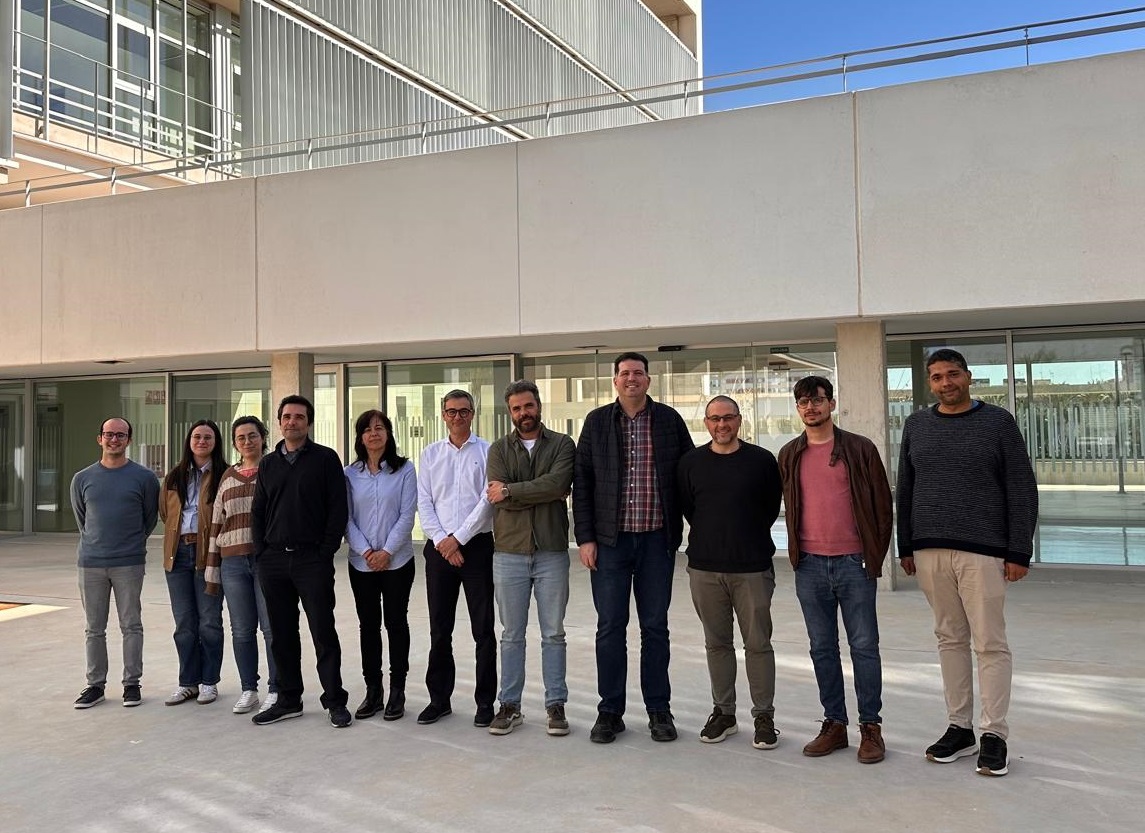
| RESTATE meeting at Miguel Hernández University of Elche in 2026 |
 |